Investigating a microgrid for Trentham, Victoria
In July 2025, the Yarra Energy Foundation (YEF), in collaboration with SolarQuip and the Trentham Sustainability Group (TSG), completed a detailed technical feasibility study for a low-voltage network connected microgrid in Trentham, Victoria. With growing concerns around energy resilience, particularly in the face of worsening weather events, this study was a proactive step toward a more resilient Trentham.
A microgrid is a localised energy network capable of operating independently from the main grid during outages- known as “islanding” from the grid. The proposed microgrid would serve 66 homes and 36 businesses by integrating solar panels, a large battery energy storage system, and a backup diesel generator.
Why a microgrid?
The town of Trentham, located in West Central Victoria on Dja Dja Wurrung Country, has experienced repeated disruptions to its energy supply, primarily due to storms in recent years. Trentham Sustainability Group (TSG), a local volunteer-led group, initiated the project to explore if a microgrid could help key businesses and some homes in the core of the Trentham township maintain power during outages and support the broader shift to renewable energy.
A June 2021 storm event was described as one of the biggest single emergency responses in the history of the State Emergency Service, affecting some 3.3 million hectares across Victoria. It left over half a million homes without power, with the Trentham township without electricity for four days and road access cut off for two days. The cost to residents and businesses was significant. Additionally, the area is also at risk to bush fires which are increasing in frequency and intensity.
The design
The system was designed to include an 88 kWp solar photovoltaic (PV) array, a 300 kW / 1.2 MWh battery (capable of approximately four hours of backup), and a 400 kVA diesel generator, all operated by one central microgrid controller. This controller would also be capable of shedding load by connecting and disconnecting devices remotely.
The design was costed at $2,456,000 based on a combination of quotes and estimates from industry experts, with operational expenses calculated to be $45,340 per annum.
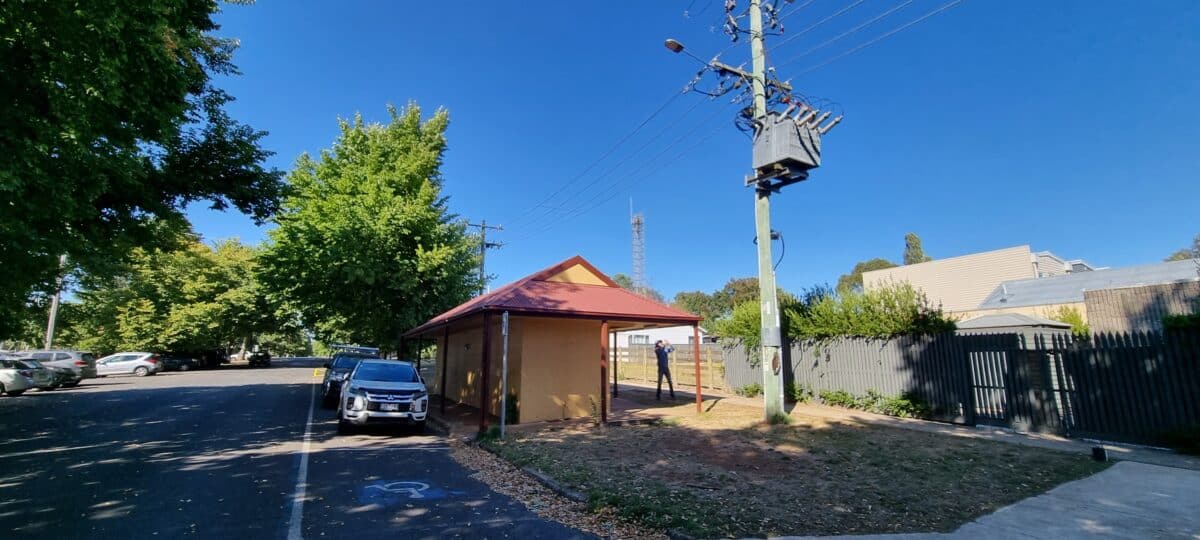
The infrastructure was proposed to be physically located near the Market Street transformer and would be able to switch seamlessly into island mode during outages. Operationally, the microgrid would follow a hybrid model: part of the battery would be reserved for emergency backup, while the rest is traded in the electricity market to help offset operating costs.
Although a promising design, the project team found significant hurdles. Financial modelling showed that, despite generating $362,000 in revenue over 15 years, the system would operate at a net loss of approximately $318,000 over that period, with a Net Present Value of -$2.889,978. Even with strong community support, the project was deemed commercially unviable under current conditions.
Table 1: Overview of Commercial Analysis
| Aspect | Results |
| Revenue (15 years) | $362,185 |
| Earnings (15 years) | -$317,915 |
| Net Present Value | -$2,889,978 |
| Return on Investment | -91% |
Microgrid design alternative
Given the financial and technical challenges of a full microgrid, the study recommended exploring alternatives that might be faster, cheaper, and more flexible.
A high-level assessment indicated that a “network of site microgrids” in other words, individual homes and businesses installing their own solar and battery systems with backup capabilities, could be a better option for Trentham than the original microgrid design.
These systems could later be aggregated into a Virtual Power Plant (VPP), where they function collectively to improve local reliability and participate in energy markets.
Conclusion
Although the proposed microgrid may not proceed in its current form, the study has laid groundwork for others seeking better community energy resilience solutions. It highlighted the need for better data access and new funding models to enable microgrids or other forms of site back-up power to be affordable.
Click here to read the full report.