From local conversations to collective action
What Melbourne’s Community Electrification Roadshow taught us
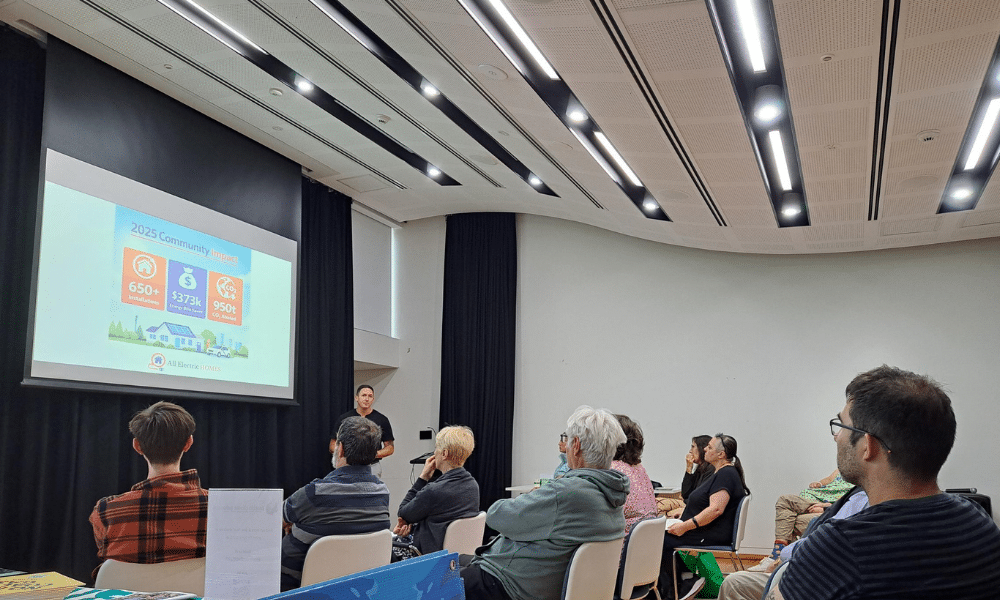
Across Melbourne, YEF and 15 local partners delivered 31 events to help households better understand their electrification options.

Household electrification can quickly become a long list of decisions: which appliance to choose, what rebates are available, how much solar is needed and whether the switchboard needs upgrading. For many households, the difficult part is knowing where to begin, what will work in their home and who they can trust to provide good advice.
Between September 2025 and May 2026, Yarra Energy Foundation coordinated the Melbourne Community Electrification Roadshow with 15 Local Event Partners, supported by Sustainability Victoria through the Community Electrification Engagement Program. Together, we delivered 31 events across 12 local government areas, drawing 3,759 attendances and directly engaging 1,759 residents.
The events ranged from getting-off-gas and solar-and-battery sessions to induction demonstrations, electric vehicle forums, apartment events and tailored sessions for renters and multicultural communities. While the formats varied across communities, the intent was always the same – make electrification local, practical and useful.
Many people are ready
Out of the 3,759 attendees, more than 450 completed post-event surveys. Almost nine in ten said they were more interested in electric appliances and technologies after attending, and around four in five rated their event useful or very useful. Three quarters expected to be fully electric within five years.
Those results matter, but they need to be read in context. The Roadshow largely reached a self-selecting audience that already had some awareness of electrification and its benefits. Many attendees arrived interested, broadly supportive and already considering upgrades. The events were therefore less about convincing people that electrification was worthwhile and more about helping them work out what to do next.
These findings tell us about an engaged audience, not the broader community as a whole. Survey respondents were also weighted towards older homeowners living in detached houses. These households generally have more control over their property and are better placed to make decisions about appliances and home upgrades, which helps explain the high level of readiness recorded through the Roadshow.
It also highlights who may be missing from the conversation. Renters, apartment residents, younger households and people facing greater financial barriers will need different forms of engagement and support. Reaching these groups will be important if future programs are to extend beyond households already interested in electrification and relatively well placed to act.
At the same time, the Roadshow identified a sizeable group already considering upgrades and looking for practical help. Their questions were straightforward: what should I replace first, what will it cost, which rebates can I use and how do I find a reliable installer?
For this audience, information needs to lead somewhere – towards clear guidance, trusted suppliers and a practical pathway to implementation.
The partnership model: scale without losing local trust
The Roadshow combined central coordination with the knowledge and networks of local partners. YEF managed the project, developed the technical content and shared resources, and supported speakers, communications and evaluation. Local partners helped shape each event around the needs of their community, from choosing the topic and venue to promoting it through trusted local networks. Councils helped with venues, promotion and event delivery, while government and industry contributors provided additional technical expertise.
“The SV CEEP has resourced some wonderful events in our municipality over the last 8 months. I think the combination of Yarra Energy Foundation and local community groups has leveraged exceptional value and reach from the funding. With the combination of in person and online events, our local communities have also been able to benefit from other group’s activities.”
– Natalie Bucknell, Clean Energy Nilumbik
Our Local Event Partners were: Bayside Climate Crisis Action Group; Clean Energy Nillumbik; Darebin City Council; Electrify Boroondara; Electrify Maribyrnong; Electrify Southside; Electrify Yarra; Healesville CoRE; Hume City Council; Milgrove Residents Action Group; Moonee Valley Sustainability; Repower Mornington Peninsula; Repower the Dandenongs; Village Zero; and Whitehorse City Council.
So, what did we learn?
- People listen to sources they trust. Local organisations and household case studies helped participants see how electrification could work in homes like their own. Accurate technical information remained essential, but familiar local voices made it easier for people to engage with it.
- Most attendees wanted help with the practicalities. Questions about costs, rebates, upgrade order and reliable installers came up repeatedly. Many people understood the case for electrification; they were trying to work out how to do it.
- Community organisations brought people through the door. Events led by community groups generally attracted stronger attendance than those delivered solely through councils. Council promotion and support still made an important difference, particularly when combined with established community networks.
- Cost is still stopping people. Appliance prices are only part of it. Switchboard work, installation requirements, rental arrangements and other household expenses can all affect whether an upgrade goes ahead. Clear information about the total likely cost is essential.
- Finding a reliable installer is part of the problem. Attendees regularly asked where they could find reputable suppliers and whether the proposed solution would suit their home. Unless programs can help answer those questions, households can leave an event interested but still unsure how to proceed.
- Promotion needs time, money and established channels. Mailing lists, council newsletters, paid social media and recognised speakers all influenced attendance. Smaller volunteer-run groups did not always have the resources to promote events beyond their existing supporters, even when they had strong local knowledge and credibility.
- Hot water stands out as a near-term opportunity. Around four in five respondents had already installed electric hot water or expected to do so within one to three years. Because hot-water systems are often replaced when they fail, helping households plan ahead could prevent another gas system being installed by default.
Where to next?
Future programs should recognise that households will arrive with very different levels of knowledge and readiness. Some will still be learning about the benefits of electrification. Others will be comparing systems, calculating costs or looking for an installer. The support offered should reflect those differences.
Timing matters as well. Most households do not electrify everything according to a single plan. Decisions are often made when an appliance fails, a renovation begins or household circumstances change. If people understand their electric options beforehand, they are less likely to make a rushed like-for-like replacement.
The Roadshow has left YEF and its partners with more than a completed series of events. Councils and community groups now have established working relationships, shared resources and practical experience that can be used in future programs.
There is clearly an audience ready to electrify. The next challenge is giving more households the practical and financial support they need to get it done.
The Melbourne Community Electrification Roadshow was supported by Sustainability Victoria through the Community Electrification Engagement Program.